Legal Guide
Property Documents to Check Before Buying a Property in India
A practical guide to the important property documents buyers should verify before purchasing a home or investment property in India.
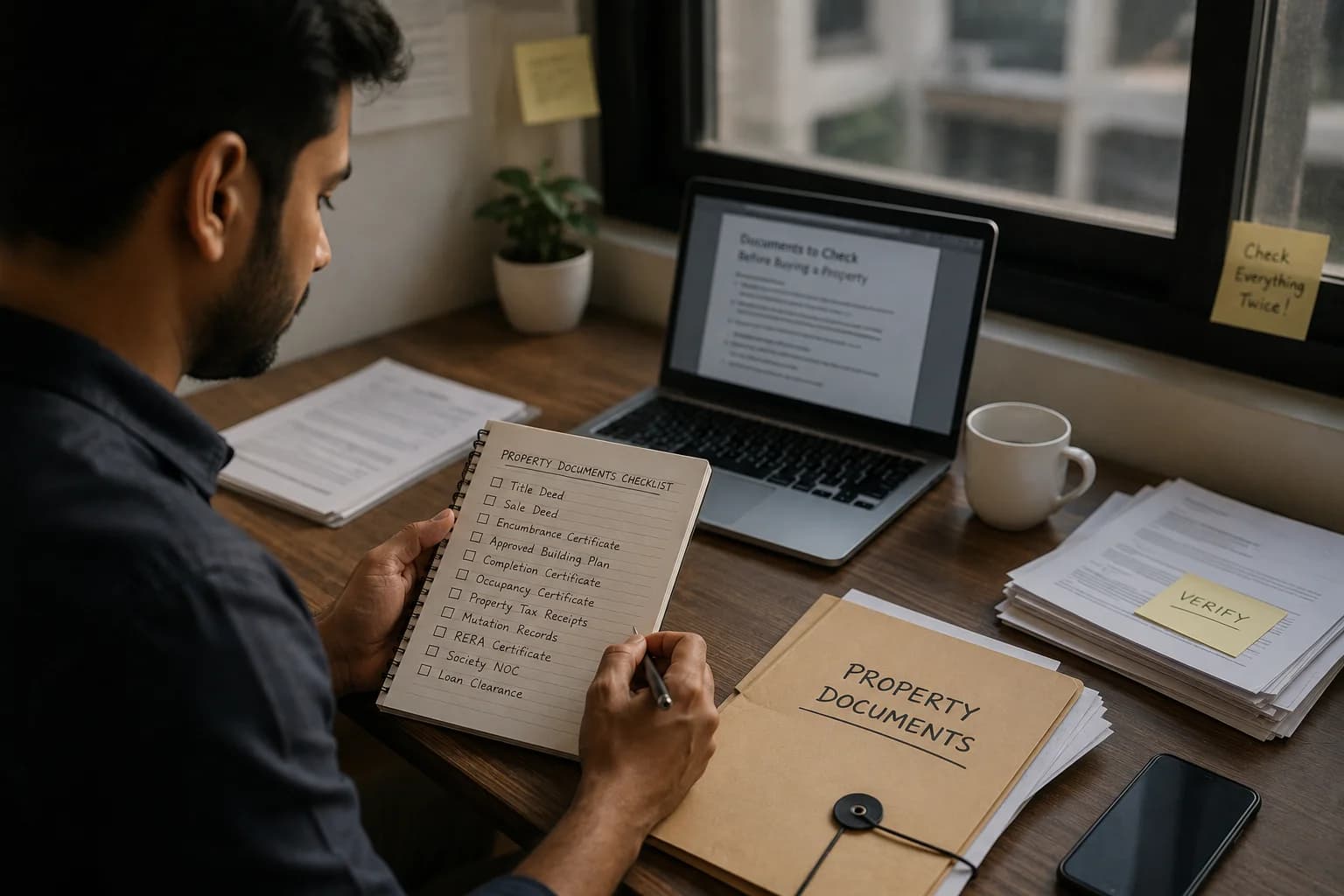
Buying a property without properly checking its documents is one of the biggest mistakes a buyer can make.
A property may look perfect.
The location may be attractive. The price may appear reasonable. The seller may seem trustworthy.
None of that guarantees the property is legally safe to buy.
Before paying a token amount or signing an agreement, buyers should understand the ownership history, approvals, permissions, and legal status of the property.
This guide covers the major documents you should investigate before buying property in India.
Important: Property documentation can vary based on the state, property type, and transaction. Always consult a qualified property lawyer before completing a purchase.
1. Title Deed
The title deed is one of the most important documents in a property transaction.
It establishes the ownership of the property.
You need to verify:
- Who currently owns the property
- Whether the seller has the legal right to sell it
- Whether the ownership history is clear
- Whether there are disputes affecting ownership
- Whether the property description matches the actual property
The title should be clear and legally transferable.
Do not simply accept a photocopy provided by the seller.
Have the relevant documents reviewed independently.
2. Sale Deed
The sale deed records the transfer of property ownership from the seller to the buyer.
For a resale property, previous sale deeds can help establish the ownership history.
Check whether:
- The seller named in the documents matches the current owner
- The property details are consistent
- The transfer was legally registered
- There are missing links in the ownership chain
A broken or unclear ownership history should be investigated before moving forward.
3. Encumbrance Certificate
An Encumbrance Certificate, commonly referred to as an EC, can help identify certain registered financial or legal claims associated with a property.
For example, a property may have been used as security for a loan.
You should understand:
- Whether any registered encumbrances exist
- The period covered by the certificate
- Whether any previous loans or claims have been properly cleared
Do not assume that a seller saying "there is no loan" is enough.
Verify independently.
4. Approved Building Plan
If you are buying an apartment, house, or constructed property, check whether the construction follows approved plans.
Important areas to verify include:
- Building layout
- Number of floors
- Permitted construction
- Property dimensions
- Required approvals
Unauthorised construction can create serious problems later.
The property you physically see should match what was legally approved.
5. Completion Certificate
A Completion Certificate is generally relevant for completed construction.
It indicates that the building was completed according to the approved plans and applicable requirements.
The availability and exact requirements can vary based on the property and location.
Still, buyers should understand the legal completion status of the project before purchasing.
6. Occupancy Certificate
An Occupancy Certificate, often called an OC, is an important document for many completed residential properties.
It generally relates to whether the building is approved for occupation.
Before purchasing a completed property, understand:
- Whether an OC is applicable
- Whether it has been issued
- Whether the building is legally ready for occupation
Do not assume that a property being physically occupied means every legal requirement has been completed.
7. Property Tax Receipts
Ask for recent property tax payment records.
This helps identify whether property-related taxes are being paid.
Check:
- Whether payments are up to date
- Whether there are outstanding dues
- Whether the property details match the records
Unpaid obligations can become a problem during or after the transaction.
8. Mutation Records
Mutation records reflect changes in property ownership in relevant government or local authority records.
The terminology and process may vary by state.
Mutation is not a replacement for a proper title review.
However, it can be part of the broader documentation required to understand the property's ownership and revenue records.
9. Land Use and Zoning Information
The intended use of a property matters.
A property may be classified for:
- Residential use
- Commercial use
- Industrial use
- Agricultural use
Do not assume that a building's current use is automatically permitted.
Verify whether the property's intended use matches the applicable land-use regulations.
This is particularly important for:
- Commercial properties
- Land purchases
- Mixed-use properties
- Investment properties
10. RERA Details for Applicable Projects
For applicable real estate projects, check the relevant project information available through the Real Estate Regulatory Authority.
Important information may include:
- Developer details
- Project registration
- Approved plans
- Project status
- Declared timelines
However, RERA registration alone should not replace your own legal due diligence.
It is one source of information.
The buyer is still responsible for understanding the transaction.
11. Home Loan Documents
If the property is currently financed by a bank or lender, additional checks are necessary.
You need to understand:
- Whether an active loan exists
- How much remains outstanding
- How the loan will be closed
- When the lender's charge will be released
- How the original documents will be transferred
Do not pay the seller without understanding the loan closure process.
A property transaction involving an existing loan needs to be structured carefully.
12. Society Documents and No-Dues Certificates
For apartments and properties within managed communities, request information about:
- Maintenance dues
- Society charges
- Special assessments
- Pending disputes
- Outstanding payments
You may also need a relevant no-dues confirmation depending on the transaction.
Ask directly whether the current owner has any unpaid obligations connected to the property.
A Simple Document Checklist
Before proceeding, create a checklist like this:
| Document | Verified? | Notes |
|---|---|---|
| Title deed | ☐ | |
| Sale deed | ☐ | |
| Encumbrance certificate | ☐ | |
| Approved building plan | ☐ | |
| Completion status | ☐ | |
| Occupancy certificate | ☐ | |
| Property tax receipts | ☐ | |
| Mutation records | ☐ | |
| Land-use information | ☐ | |
| RERA details | ☐ | |
| Loan clearance documents | ☐ | |
| Society no-dues records | ☐ |
Do not rely on memory.
Property transactions involve too many documents and too much money to manage casually.
Common Mistakes Buyers Make
Trusting Verbal Assurances
A seller may say everything is legally clear.
That statement has limited value without documentation.
Verify independently.
Checking Only the Latest Documents
Ownership history can matter.
Older transactions may reveal issues that are not obvious from the latest document alone.
Using the Seller's Lawyer Only
The seller's interests and your interests are not necessarily the same.
Independent legal advice can help identify risks before you commit money.
Paying a Large Token Amount Too Early
Once significant money has been paid, buyers often feel pressured to continue.
Do your basic due diligence before making a substantial commitment.
Ignoring Small Documentation Mismatches
Differences in:
- Names
- Survey numbers
- Property dimensions
- Addresses
- Ownership details
should not simply be ignored.
Small inconsistencies can indicate larger problems.
Questions to Ask Before Buying
Before finalising a property, ask:
- Who legally owns the property?
- Is the title clear and transferable?
- Are there any outstanding loans?
- Are there any known disputes?
- Are all required approvals available?
- Does the actual property match the approved documents?
- Are property taxes and maintenance dues paid?
- Is the property subject to any restrictions?
- What documents will be transferred to me?
If you cannot get clear answers, slow down.
When to Walk Away
Consider pausing or walking away when:
- The seller refuses to provide important documents
- Ownership records are unclear
- Major document inconsistencies cannot be explained
- Required approvals appear to be missing
- You are pressured to pay before verification
- The transaction structure seems unnecessarily complicated
There will always be another property.
Recovering money from a bad property transaction can be much harder.
Final Thoughts
A property purchase is not just a decision about:
- Price
- Location
- Size
- Amenities
It is also a legal transaction.
The best-looking property can become a bad investment if the ownership or documentation is problematic.
Before committing money:
- Collect the relevant documents.
- Verify ownership.
- Check approvals and records.
- Investigate outstanding liabilities.
- Use independent professional advice where necessary.
Do not rush because you are afraid of losing the property.
A good property can survive due diligence.
If a deal falls apart because you asked reasonable questions, that is useful information.
The goal is not to buy property quickly.
The goal is to buy property safely.