Buying Guide
Complete Guide to Buying Property in India
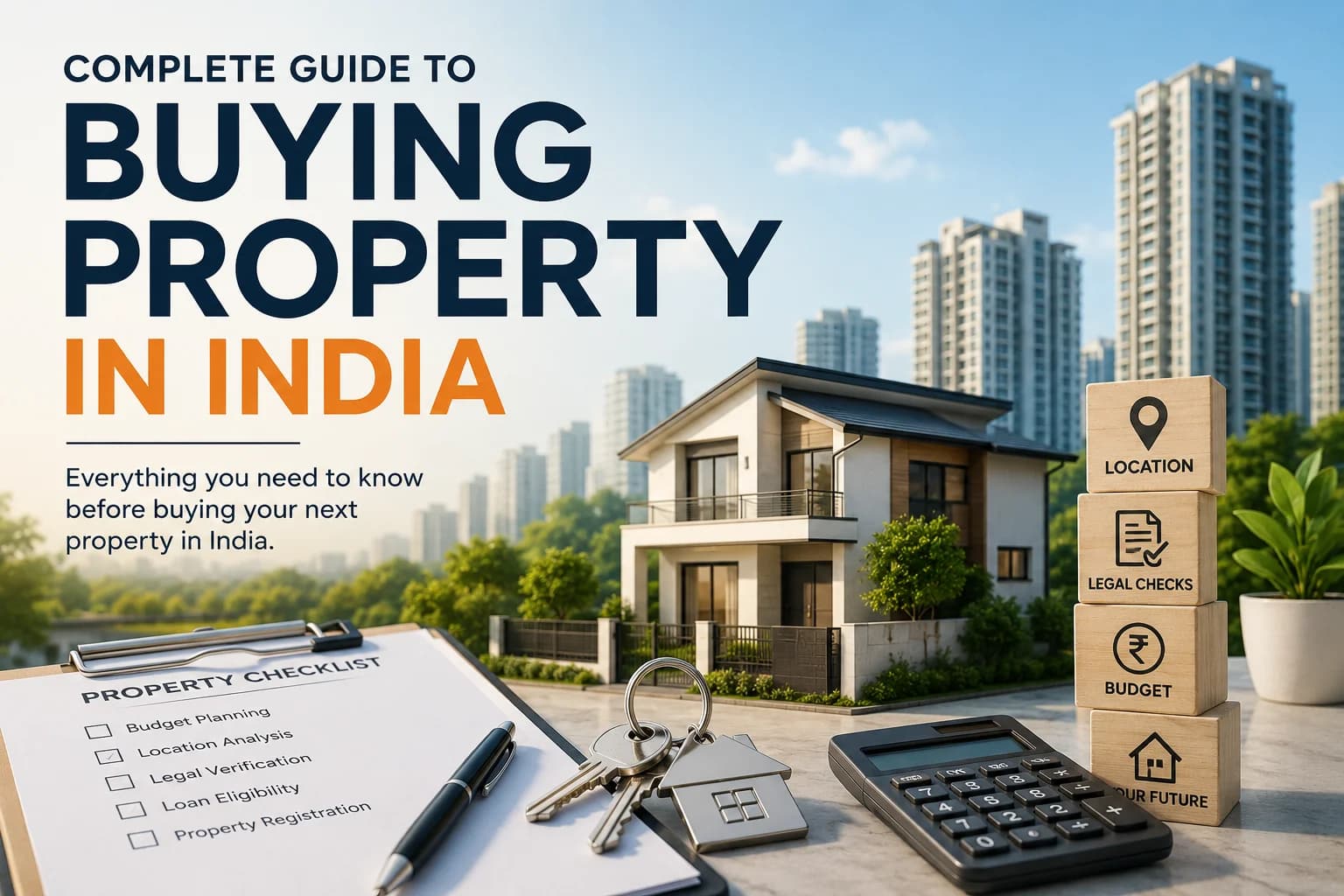
Everything you need to know before buying your next property in India, from budgeting and legal checks to location analysis and final registration.
Buying a property is one of the biggest financial decisions most people make. Whether you are purchasing your first home, an apartment for rental income, a plot, or an investment property, the decision involves far more than finding a property that looks good.
The right property should fit your financial situation, legal requirements, lifestyle needs, and long-term goals.
This guide covers the key steps you should consider before buying property in India.
1. Define Your Budget
The first mistake many buyers make is starting their property search before understanding what they can actually afford.
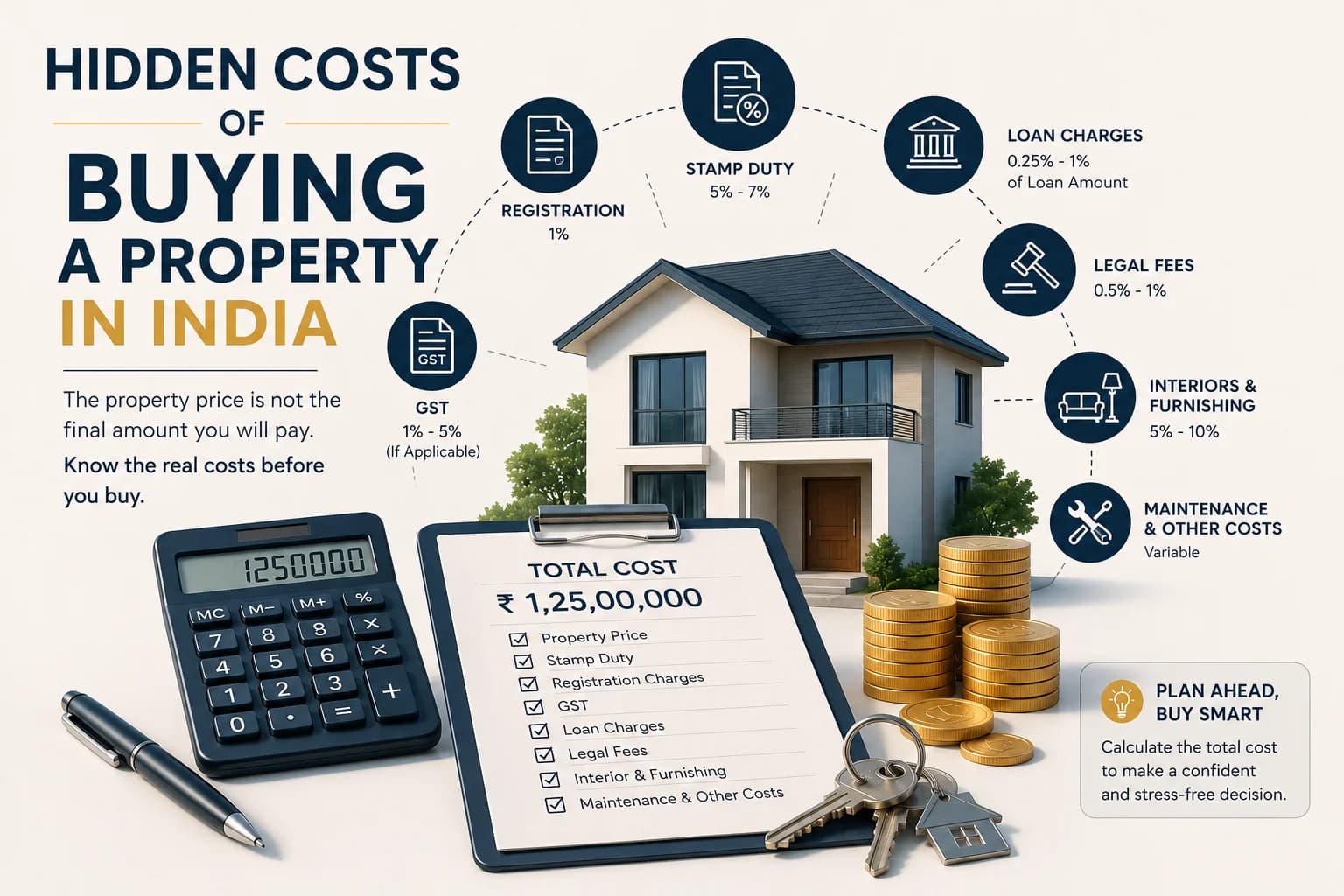
Your budget should not be based only on the advertised property price. Buying a property involves several additional costs that can significantly increase the total amount you need to spend.
Consider the following:
- Property purchase price
- Down payment
- Home loan interest
- Stamp duty
- Registration charges
- Legal and documentation fees
- Brokerage charges, if applicable
- GST, where applicable
- Parking charges
- Maintenance deposits
- Interior and furnishing costs
- Moving expenses
Before you start searching, determine three numbers:
Your ideal budget
This is the amount you are comfortable spending without putting excessive pressure on your finances.
Your maximum budget
This is the absolute limit you should not cross.
Your upfront cash requirement
Calculate how much money you need immediately for the down payment and transaction-related expenses.
A property that is slightly beyond your budget can become significantly more expensive once loan interest and additional charges are included.
2. Understand Why You Are Buying the Property
Not every property is suitable for every buyer.
Before comparing listings, be clear about your objective.
Are you buying for:
- Self-use
- Rental income
- Long-term appreciation
- Retirement
- Business use
- A second home
- Land investment
Your objective should influence the type of property and location you choose.
For example, a property purchased for rental income should be evaluated based on tenant demand, accessibility, rental yield, and maintenance costs. A home purchased for your family may require better schools, hospitals, daily conveniences, and commute options.
Do not buy an investment property using only the criteria you would use for your own home.
3. Research the Location Carefully
Location has a major impact on both quality of life and property value.
A beautiful property in a weak location can become difficult to sell or rent later.
Before making a decision, evaluate:
- Road connectivity
- Public transportation
- Distance from workplaces
- Schools and colleges
- Hospitals
- Shopping and daily conveniences
- Future infrastructure development
- Traffic conditions
- Water availability
- Flooding or environmental risks
- Safety and neighbourhood quality
Visit the area at different times of the day if possible.
A location can feel completely different during peak traffic, late evenings, or heavy rainfall.
Also research future developments in the area. New roads, metro lines, commercial projects, or employment hubs can increase demand, but you should verify plans rather than relying only on sales promises.
4. Compare More Than One Property
Do not fall in love with the first property you see.
Shortlist multiple options and compare them using the same criteria.
Create a simple comparison table:
| Factor | Property A | Property B | Property C |
|---|---|---|---|
| Price | |||
| Location | |||
| Size | |||
| Age | |||
| Connectivity | |||
| Legal status | |||
| Maintenance cost | |||
| Rental potential | |||
| Resale potential |
This prevents emotional decision-making.
A property may appear cheaper but have poor connectivity, high maintenance costs, or weak resale demand. Another property may cost more initially but offer better long-term value.
The goal is not to find the cheapest property.
The goal is to find the best value for your specific objective.
5. Verify the Property Documents
Never assume that a property is legally clear because the seller, broker, or developer says so.
Legal verification is one of the most important parts of the buying process.
Depending on the type of property and location, important documents may include:
- Title deed
- Sale deed
- Encumbrance certificate
- Previous ownership documents
- Land tax receipts
- Approved building plans
- Building permit
- Completion certificate
- Occupancy certificate
- Property tax records
- Possession documents
- Relevant authority approvals
The exact documents required can vary depending on whether you are purchasing a plot, apartment, villa, commercial property, resale property, or under-construction project.
Use a qualified legal professional to review the documents before making a major payment.
Saving money on legal verification is a bad trade. A documentation problem can cost far more than the legal review itself.
6. Check the Seller or Developer
The property itself is not the only thing you need to evaluate.
You should also verify who you are buying from.
For a resale property, verify the seller's ownership and authority to sell the property.
For a developer project, research:
- Previous projects
- Construction quality
- Delivery history
- Customer complaints
- Delays
- Legal disputes
- Financial stability
If the property is still under construction, understand the expected completion timeline and the consequences of delays.
Do not rely entirely on marketing brochures or verbal promises.
7. Inspect the Property Properly
Photos and virtual tours are useful, but they are not enough.
Visit the property and inspect it carefully.
Look for:
- Structural cracks
- Water leakage
- Dampness
- Plumbing issues
- Electrical condition
- Ventilation
- Natural light
- Mobile network availability
- Water pressure
- Noise levels
- Parking access
- Common area maintenance
For apartments, inspect the entire building and community, not just the sample apartment.
Ask questions about:
- Monthly maintenance
- Backup power
- Water supply
- Parking allocation
- Security
- Lift maintenance
- Waste management
- Association rules
For older properties, the cost of repairs can significantly change the economics of the purchase.
8. Understand the Total Cost of Ownership
The purchase price is only the beginning.
You should estimate what the property will cost you over several years.
Recurring costs may include:
- Loan EMI
- Maintenance charges
- Property taxes
- Insurance
- Repairs
- Renovation
- Utility expenses
- Association charges
For investment properties, calculate expected rental income against these costs.
Do not assume that rent equals profit.
Your actual return depends on vacancy periods, maintenance, taxes, repairs, financing costs, and other expenses.
9. Negotiate Based on Data
Negotiation works best when you understand the market.
Research:
- Recent prices in the locality
- Prices of similar properties
- Average price per square foot
- How long the property has been listed
- Whether the seller needs to sell quickly
- Competing inventory in the area
Do not negotiate randomly.
If you can demonstrate that similar properties are available at lower prices, you have a stronger position.
Also negotiate beyond the purchase price.
You may be able to negotiate:
- Parking
- Interior work
- Appliances
- Maintenance charges
- Payment schedule
- Minor repairs
- Additional fixtures
The total transaction matters more than a small reduction in the headline price.
10. Read the Agreement Carefully Before Signing
Do not sign documents simply because the transaction appears to be moving quickly.
Read the agreement carefully and understand:
- Total property price
- Payment schedule
- Possession timeline
- Included amenities
- Penalties
- Cancellation conditions
- Refund conditions
- Responsibilities of both parties
- Additional charges
If something was promised verbally, do not assume it will automatically become enforceable.
Important commitments should be properly documented.
11. Plan Your Home Loan Carefully
A larger loan can help you purchase a more expensive property, but it also increases your long-term financial risk.
Before finalising a loan, compare:
- Interest rates
- Loan tenure
- Processing fees
- Prepayment conditions
- Foreclosure charges, where applicable
- EMI amount
- Fixed versus floating rate options
Do not choose a loan only because the EMI appears affordable today.
Consider what happens if:
- Your income falls
- Interest rates increase
- You have a major emergency expense
- You want to change jobs or start a business
Your property should strengthen your financial position, not trap you in an unsustainable monthly obligation.
12. Think About Resale Before You Buy
Even if you plan to keep the property for decades, circumstances can change.
You may need to sell because of:
- Job relocation
- Family changes
- Financial requirements
- Better investment opportunities
Before buying, ask:
If I needed to sell this property in five years, who would buy it?
Properties with strong location, practical layouts, legal clarity, good connectivity, and consistent demand are generally easier to sell than highly unusual or poorly located properties.
Liquidity matters.
A property can be valuable on paper and still be difficult to sell.
Common Mistakes to Avoid
Here are some of the most common mistakes buyers make:
Buying based only on emotion
A beautiful interior should not distract you from poor location, legal issues, or an unrealistic price.
Ignoring additional costs
The final transaction cost can be significantly higher than the advertised property price.
Skipping legal verification
Never assume documentation is correct without proper verification.
Stretching your finances too far
Being approved for a large loan does not mean you should take the maximum available amount.
Believing future development promises without verification
Future infrastructure can increase property value, but only if the development actually happens.
Not comparing alternatives
The property you see first is rarely the only viable option.
Final Checklist Before Buying Property
Before making the final decision, make sure you can confidently answer these questions:
- Is the property within my realistic budget?
- Do I understand the total cost?
- Have I inspected the property properly?
- Have I researched the location?
- Are the legal documents verified?
- Do I understand the agreement?
- Is the seller or developer trustworthy?
- Does the property fit my actual objective?
- Can I comfortably handle the long-term financial commitment?
- Does the property have reasonable resale or rental potential?
Final Thoughts
Buying property should be a structured decision, not an emotional one.
The best property is not always the cheapest, newest, or most luxurious option.
A good property purchase sits at the intersection of:
- The right location
- A realistic price
- Legal clarity
- Strong long-term demand
- Financial sustainability
Take your time. Compare options. Verify the details. Ask difficult questions before committing your money.
A few weeks of careful research can prevent years of financial regret.
Looking for verified properties in your preferred location? Explore available listings, compare options, and make your next property decision with better information.